

The Canadian government has reached an agreement with the social media platform TikTok after years of debate over the app’s data practices, particularly those affecting young users. The deal allows TikTok to continue operating in Canada under tighter oversight rather than facing a shutdown.
As social media researchers at the Social Media Lab at Toronto Metropolitan University, we’ve always paid close attention to the state of social media in Canada. We have followed the TikTok ban saga closely since early 2020, when United States President Donald Trump first tried to ban the platform, long before he later came out in favour of keeping it.
While the new agreement does move towards greater oversight of TikTok, major concerns remain. TikTok’s parent company, ByteDance, is based in China and Chinese national security laws can compel companies to co-operate with state authorities. This underlying risk sits beyond the reach of Canada’s safeguards.
The agreement follows a new national security review that reversed an earlier conclusion pointing toward closure of TikTok’s Canadian operations. Instead of a ban, the federal government has chosen a regulatory approach, one that keeps the app available while imposing legally binding conditions. The deal reduces some risks, but it does not resolve deeper questions about ownership, data flows and national security.
So what has TikTok agreed to? And what will the millions of Canadian users, creators, advertisers and cultural groups that rely on the platform notice?
Stronger protections for youth and minors
Under the new rules, TikTok must strengthen its protection of Canadian user data. This includes creating a security “gateway” to control access to that data, adopting privacy-enhancing technologies and allowing independent third-party monitoring to verify how data is handled.
TikTok also committed to stronger protections for minors and youth, a key concern driving the government’s review.
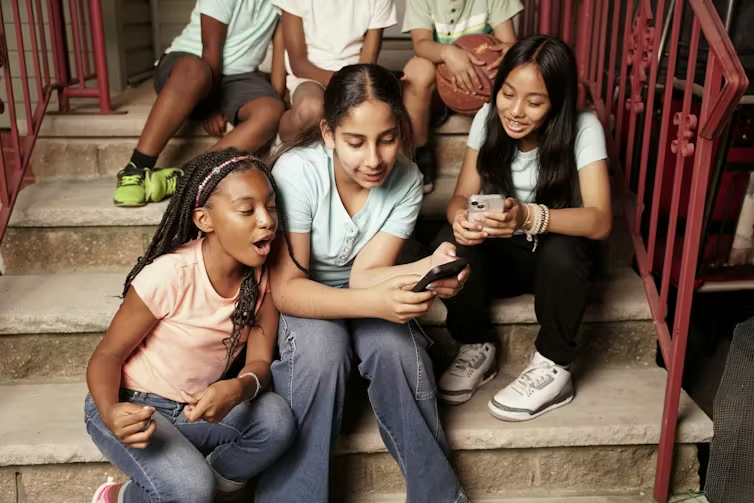
For everyday users, the focus on youth protection is likely to be the most visible change. Stricter age limits could affect livestreaming. Gift features may be more restricted for younger users. Content involving minors is likely to face stricter moderation.
Canadian creators will also feel the impact. Those with audiences largely made up of teenagers may face tighter moderation or additional eligibility checks for certain features and monetization tools. Sponsors may also ask more detailed questions about audience demographics as brands become more cautious about youth-focused content.
Many changes will happen behind the scenes. As TikTok Canada adjusts to the new requirements, its verification processes, advertising tools and moderation systems are expected to become more demanding.
As the government now requires stronger protection of Canadian user data, people who earn money on the platform may encounter extra steps. These may include stricter identity checks, added requirements for business accounts or ad payments and clearer information about where Canadian user data is stored.

Does this make TikTok safer? Compared to what existed before, the agreement does move toward greater oversight. Independent monitoring, if carried out properly, gives the government some visibility into TikTok’s data practices and the commitments are legally binding rather than voluntary.
Canadian data can still leave Canada
Enforcement details are still unclear. The government has said it will appoint an independent monitor, but has not named the monitor, explained how audits will work or detailed what penalties TikTok would face for failing to comply. Without clear consequences, oversight could prove weaker in practice than it appears on paper.
The agreement also stops short of requiring full data localization. Canadian user data does not have to stay entirely within the country. Although technical controls may limit access, data can still move through systems outside Canada. This leaves some exposure to unauthorized access or foreign influence.

Another gap is research access. The deal does not require TikTok to share data with vetted Canadian public-interest researchers, like academics or journalists. Currently, researchers from Canada are not qualified for access to the TikTok application programming interface (API), while their counterparts in the European Union and U.S. are. This makes it harder for Canadian researchers to independently study the platform’s impact on Canadian users.
A cautious compromise
Overall, the agreement reflects a compromise. Canada avoided a disruptive ban; TikTok accepted tighter rules to keep operating in a key market. The deal reduces some risks, but it does not resolve deeper questions about ownership, data flows and national security.
Those tensions are likely to resurface as Canada continues to grapple with how to regulate global platforms that play an outsized role in everyday life.
